TL;DR
The GHG Protocol (Greenhouse Gas Protocol) is the world’s most widely used framework for measuring and managing greenhouse gas emissions. Developed by the World Resources Institute (WRI) and the World Business Council for Sustainable Development (WBCSD), it provides standards, guidance, tools, and training for businesses, governments, and other organizations to track and report emissions accurately.
The protocol includes standards for:
- Corporate emissions accounting (Scope 1, 2, and 3)
- Project-level emissions assessment
- Product lifecycle and value chain emissions
- City- and country-level emissions
It underpins most global climate reporting frameworks (e.g., SBTi , CSRD) and is essential for credible, transparent climate action.
Table of Contents
- History and Background
- Core Components of the GHG Protocol
- The Three Scopes of Emissions
- Why the GHG Protocol Matters
- Integration with Other Sustainability Frameworks
- Emerging Trends and Updates
- Conclusion
- Easily produce a GHG report with Atmoz
- FAQ
As climate change takes center stage in global policy and business strategy, reliable and standardized methods for measuring greenhouse gas emissions are critical. The GHG Protocol serves as the foundational framework for this purpose. Whether you’re a multinational corporation, a local government, or a sustainability consultant, understanding the GHG Protocol is essential for credible climate reporting and emissions management.
1. History and Background
The GHG Protocol was launched in 1998 as a joint initiative between:
- World Resources Institute (WRI) – a global research organization focused on the environment and development.
- World Business Council for Sustainable Development (WBCSD) – a CEO-led organization of over 200 international companies committed to sustainability.
By the early 2000s, the GHG Protocol had established itself as the de facto global standard for carbon accounting. It remains the basis for most corporate carbon disclosures and climate targets today.
2. Core Components of the GHG Protocol
The GHG Protocol consists of standards, tools, and guidance tailored for different types of entities and emissions. It provides both:
- Accounting frameworks: How emissions should be quantified.
- Reporting guidance: How disclosures should be presented.
The GHG Protocol does not mandate emissions reductions itself but ensures consistency and transparency in how emissions are tracked and reported.
3. The Three Scopes of Emissions
One of the most widely recognized features of the GHG Protocol is its classification of emissions into three “scopes”:
Scope 1: Direct Emissions
These are emissions from sources that are owned or controlled by the company or entity.
Examples:
- Fuel combustion in company-owned vehicles
- On-site manufacturing or industrial emissions
- Leaks from refrigerants or chemical processes
Scope 2: Indirect Energy Emissions
These are indirect emissions from the generation of purchased electricity, steam, heating, and cooling.
Examples:
- Electricity used in office buildings
- Steam used in industrial processes
Scope 2 emissions occur at the utility provider but are accounted for by the organization using the energy.
Scope 3: Other Indirect Emissions
Scope 3 includes all other indirect emissions in the value chain, both upstream and downstream.
Examples:
- Business travel
- Product use and disposal
- Supply chain (purchased goods and services)
- Employee commuting
- Waste disposal
Scope 3 is often the largest portion of a company’s carbon footprint—and the hardest to measure.
4. Why the GHG Protocol Matters
Here’s why the GHG Protocol is vital in today’s climate-conscious world:
- Standardization: Provides a globally accepted method for calculating emissions.
- Comparability: Allows companies and governments to benchmark performance.
- Transparency: Builds trust with stakeholders through credible disclosures.
- Compliance: Supports alignment with other frameworks (e.g., TCFD, CDP, SEC climate rule).
- Risk Management: Helps identify carbon-intensive operations and supply chain vulnerabilities.
5. Integration with Other Sustainability Frameworks
The GHG Protocol is the backbone for many ESG and sustainability frameworks:
- SBTi (Science Based Targets initiative) – mandates that corporate targets be based on GHG Protocol data.
- CSRD – EU directive requiring large companies to report standardized sustainability data.
- CDP (Carbon Disclosure Project) – uses GHG Protocol standards in its questionnaires.
- TCFD (Task Force on Climate-related Financial Disclosures) – requires disclosure of Scope 1, 2, and ideally Scope 3 emissions.
- ISSB/IFRS S2 – aligns with GHG Protocol for climate-related disclosures.
- GRI (Global Reporting Initiative) – GRI 305 is based on GHG Protocol categories.
This integration makes the GHG Protocol essential for any organization aiming to comply with global reporting expectations.
6. Emerging Trends and Updates
The GHG Protocol is undergoing major revisions and updates:
- 2023–2025 GHG Protocol Revision Process: Public consultation rounds are being held to update:
- Scope 2 market-based accounting
- Scope 3 category guidance
- Reporting boundaries and allocation rules
Emerging trends include:
- Alignment with climate target verification (e.g., SBTi)
- Integration of avoided emissions and removals
- Improved emissions factors and digital tools
Organizations are encouraged to monitor updates and prepare for stricter reporting expectations.
7. Conclusion
The GHG Protocol is the cornerstone of modern greenhouse gas accounting and reporting. It enables companies, cities, and governments to understand, measure, and reduce their carbon footprints with credibility and consistency.
As global expectations around transparency and climate action increase, aligning with the GHG Protocol is not just a best practice—it’s fast becoming a requirement. Whether you’re just starting out or looking to enhance existing sustainability disclosures, the GHG Protocol is your go-to standard for climate credibility.
8. Easily produce GHG reports with Atmoz
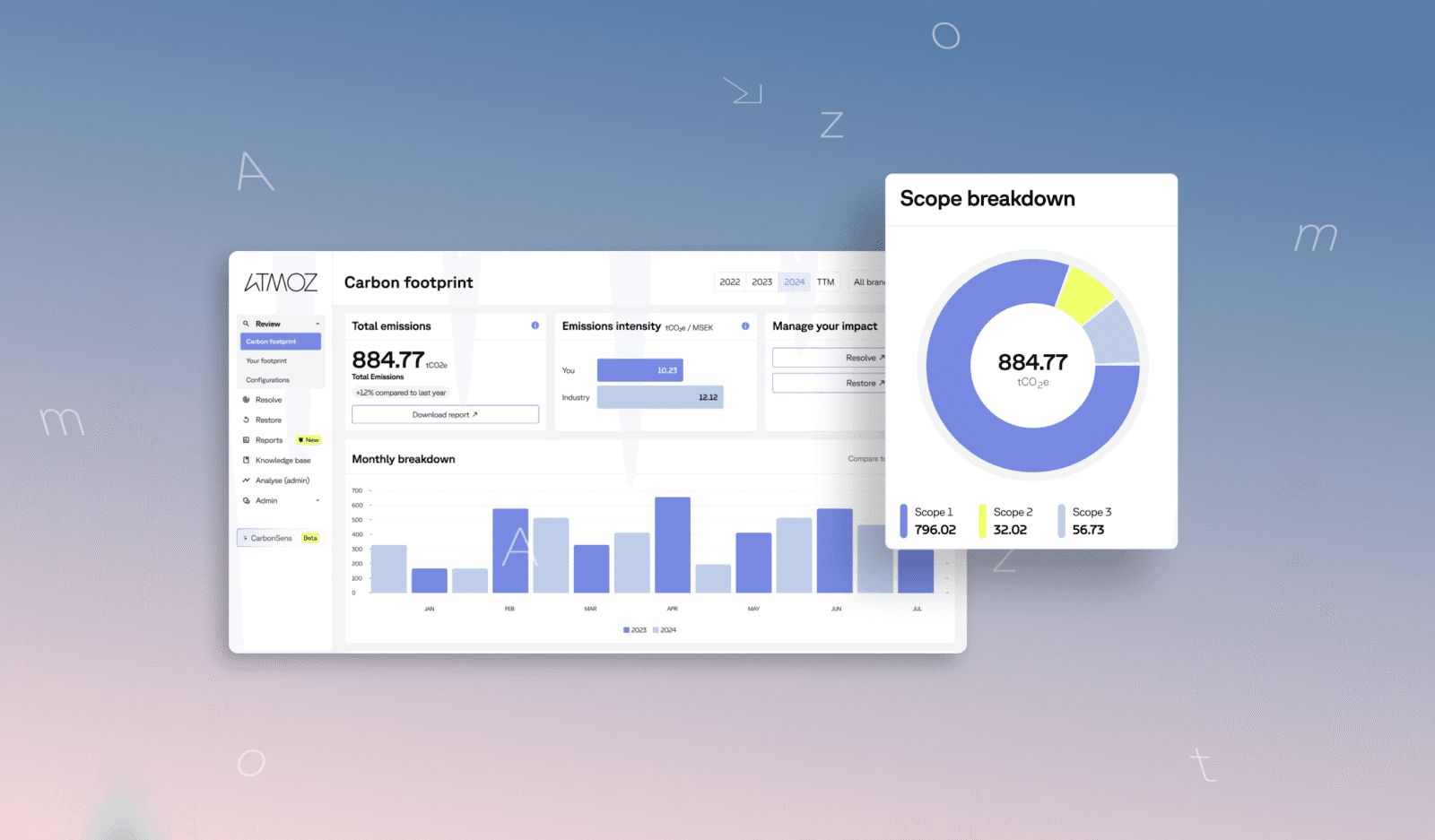
Atmoz supports clients with carbon accounting based on the GHG protocol. By using our automated software companies can produce a GHG report in minutes. Learn more about our Carbon accounting offer.
9. FAQ
What is the GHG Protocol?
The GHG Protocol is a globally recognized standard for measuring and reporting greenhouse gas emissions. It provides guidance across Scopes 1, 2, and 3 emissions and underpins many sustainability frameworks.
Who developed the GHG Protocol?
It was developed by the World Resources Institute (WRI) and the World Business Council for Sustainable Development (WBCSD).
What are Scopes 1, 2, and 3?
- Scope 1: Direct emissions from owned or controlled sources.
- Scope 2: Indirect emissions from purchased electricity and energy.
- Scope 3: All other indirect emissions in a company’s value chain.
Is the GHG Protocol mandatory?
Not by itself, but many regulatory frameworks and disclosure systems require or recommend it (e.g., SEC Climate Rule, CSRD, TCFD).
How is it different from GRI or CDP?
The GHG Protocol provides the methodology for calculating emissions. GRI, CDP, and others provide broader reporting frameworks that rely on GHG Protocol data.
Is Scope 3 reporting required?
For voluntary reporting, it’s encouraged. However, under frameworks like SBTi or CSRD, Scope 3 disclosure is often mandatory if it represents a significant portion of emissions.
What tools are available to implement it?
- Carbon Accounting players, e.g Atmoz, offers software that automates producing GHG reports
What’s next for the GHG Protocol?
As of 2025, revisions are underway to address emerging concerns like carbon removals, Scope 2 updates, and clearer Scope 3 accounting.


 Protocol explained: A guide to the global carbon accounting standard )