Stepsta built sustainability in from day one and found a more effective path to climate impact together with Atmoz
When Stepsta was founded in 2022, its ambition was clear: to modernise a traditional industry by making it as easy to purchase a bespoke staircase online as any other product. At the same time, the founders wanted to build a company that took responsibility for its climate footprint from the very beginning.
Today, Stepsta sells made-to-measure indoor staircases to customers across Sweden, Norway, Denmark, Finland and Germany. The company generated SEK 22 million in revenue last year and is targeting approximately SEK 30 million in 2026, despite continued challenges in the construction market.
Digitising a traditionally analogue industry
Stepsta was founded by two entrepreneurs with backgrounds in e-commerce. Their goal was to bring modern digital customer experiences into the construction industry.
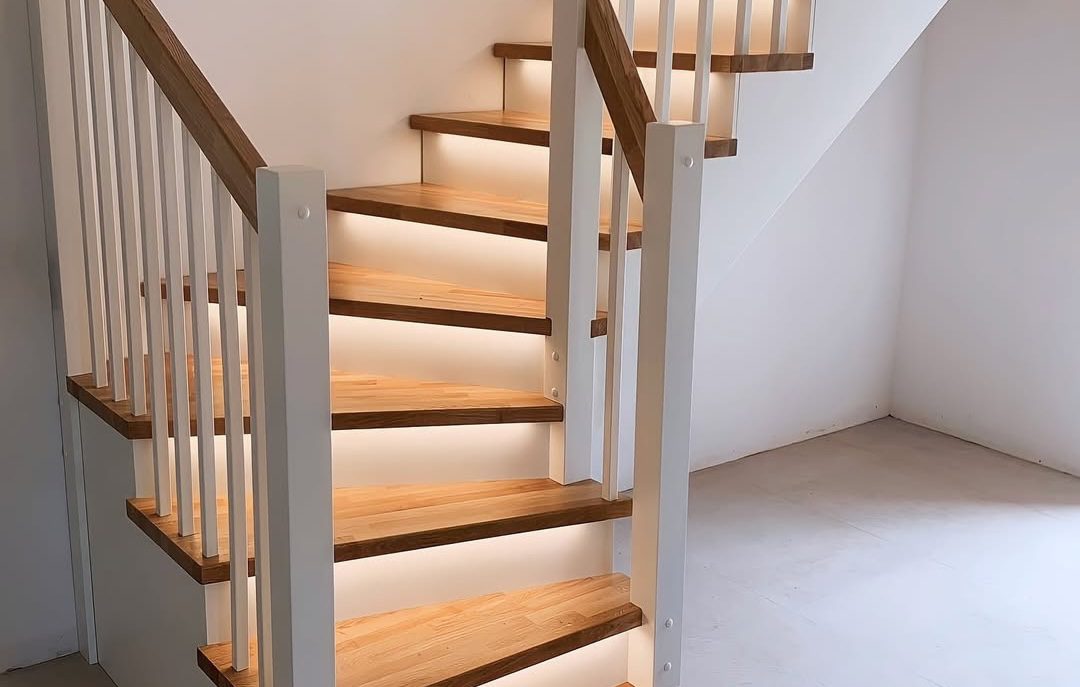
Through the company’s online platform, customers can design their own staircase, receive instant pricing and place an order entirely online—something that previously often required multiple manual steps and lengthy quotation processes.
Each staircase is manufactured to the customer’s exact specifications. Production only begins once an order has been placed, eliminating the need for inventory and reducing the risk of waste.
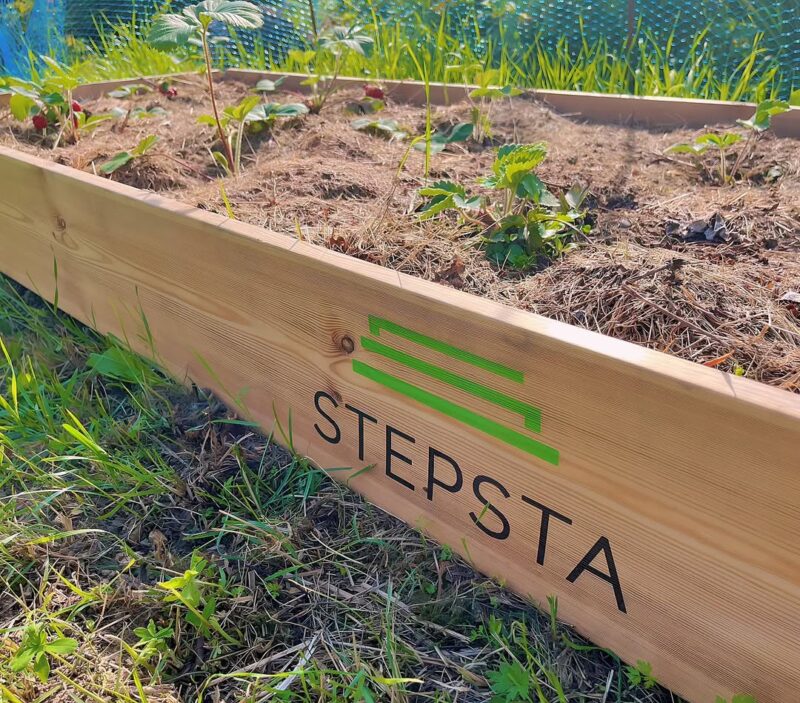
Manufacturing takes place in a modern facility where CNC machinery and robotic production ensure high precision and short lead times. The entire business is built around producing the right product for the right customer at the right time. The staircases are also delivered in wooden pallet collars, which are often reused, for example as raised garden beds.
Climate action was built into the business from the start
For Stepsta, sustainability was never something to be added later.
From the outset, the company decided to take responsibility for its climate footprint and incorporate the cost into its business model. The idea was to assign an economic value to climate impact.
We wanted to put a cost on our carbon emissions. If a more sustainable alternative costs less than the cost associated with those emissions, it becomes much easier to make the right decision, says Anders Danielson, CEO
How Stepsta builds its climate budget
Today, Stepsta maintains a climate budget based on the number of staircases sold. This budget is then used to invest in carbon credits that deliver the greatest overall benefit and have a clear connection to the company’s operations.
The process works as follows:
- Stepsta estimates the climate footprint of each staircase—from the initial design concept to delivery to the end customer.
- The company applies an internal carbon price to that footprint.
- This cost is used to guide operational decisions, helping the business choose lower-emission alternatives and reduce its overall climate impact.
- A portion of revenue from every staircase sold is allocated to a climate budget.
- The budget is invested in external climate projects that deliver the greatest overall impact.
This provides the organisation with a practical tool for decision-making. Read more about developing an internal carbon price here.
We wanted to put a price on our climate footprint. Once you do that, you can start comparing different alternatives and see where your money creates the greatest impact.
The climate budget grows alongside the business. The more staircases that are sold—and the larger the associated footprint—the greater the budget available for investment in climate and nature projects. In this way, sustainability becomes an integrated part of the business and scales as the company grows.
Why Stepsta chose the Boreal Mix climate project
As the business expanded, Stepsta also evolved its approach to climate action. Through its collaboration with Atmoz, the focus shifted from simply measuring tonnes of CO₂ to considering how the company’s climate budget could create the greatest possible positive impact.
Rather than comparing projects solely based on cost per tonne of CO₂, a broader perspective was introduced—one that considers climate impact, biodiversity and wider environmental values.
Atmoz helped us realise that it’s not only about CO₂. Some projects may cost more, but they also create value for biodiversity, communities and nature.
When Atmoz introduced the Boreal Mix project, the connection immediately made sense.
Boreal Mix is a forest conservation project in northern Sweden that helps protect valuable old-growth forests and strengthen biodiversity in some of Europe’s last remaining near-natural forest ecosystems. By financing the long-term protection of forest areas, the project helps preserve important habitats for plants and wildlife while ensuring that large amounts of carbon remain stored within forest ecosystems.
Read more about Boreal Mix.
For Stepsta, whose products are fundamentally based on wood as a raw material, the project created a natural link between the business and the environmental initiatives it wanted to support.
Three factors were particularly important:
- A Swedish project
- A natural connection between forests and the company’s products
- The opportunity to contribute to biodiversity and recreational natural environments
Forests are the foundation of our business. Being able to invest in forests here in Sweden feels much more natural for us.
For the founders, who have roots in northern Sweden, Boreal Mix also created a stronger emotional connection to their climate work. Rather than focusing solely on carbon, the project is about preserving living forests that people can enjoy while also serving as important habitats for many species.
It became a tangible example of the broader sustainability perspective that emerged through the partnership with Atmoz – one in which climate benefits, biodiversity and local environmental values can reinforce one another.
Starting before everything is perfect
A common theme throughout Stepsta’s journey has been a willingness to act early.
When the company launched its first version, it did not know whether customers would actually purchase bespoke staircases online. A few weeks later, the first order arrived.
The same philosophy has shaped its sustainability work.
Rather than waiting for perfect data or sophisticated systems, the company began with a simple emissions model based on standard assumptions, covering production, transportation and overheads. The model has since evolved as the business has grown.
If we had waited for the perfect model, we still wouldn’t have got started.
For Stepsta, the most important thing has been to start, learn and improve along the way.
The result: sustainability as part of the company culture
For Stepsta, climate action is not primarily about driving direct sales.
Customers notice the company’s efforts and provide positive feedback, but the greatest impact lies elsewhere.
It is about demonstrating the kind of company they want to be.
For us, it’s about the kind of company we want to build and how we view our role in the world. Climate action is a natural part of that responsibility.
Because sustainability has been integrated from the very beginning, it has become a natural part of the company culture, decision-making processes and brand identity. It influences everything from business priorities to how employees and customers perceive the company.
Stepsta’s advice to other businesses
1. Start small and improve over time
Don’t wait for the perfect model. Start with what you have and improve as you go.
2. Put a price on your carbon emissions
Assign a cost to your company’s climate footprint. When emissions carry a financial cost, it becomes easier to make better decisions and compare alternatives.
If a more sustainable transport or production option costs less than the climate cost associated with emissions, the choice becomes straightforward. Carbon pricing creates a practical management tool that helps businesses prioritise and evaluate investments over time.
3. Think beyond CO₂
Consider which values matter most to your business. Climate, biodiversity, nature and local communities can all form part of the same strategy.
4. Create a natural link to your business
The most effective initiatives feel relevant to both customers and employees. For Stepsta, the connection between wood-based products and forest conservation projects was an obvious fit.
About Stepsta
Founded: 2022
Industry: Bespoke indoor wooden staircases
Markets: Sweden, Norway, Denmark, Finland and Germany
Business model: 100% made-to-order manufacturing
Climate strategy: Climate budgeting and investments in carbon credits through Atmoz
Visit Stepsta here.